History of Bern
For more than eight centuries, Bern has evolved as a political, cultural and commercial centre — from a feudal duchy to a federal capital.
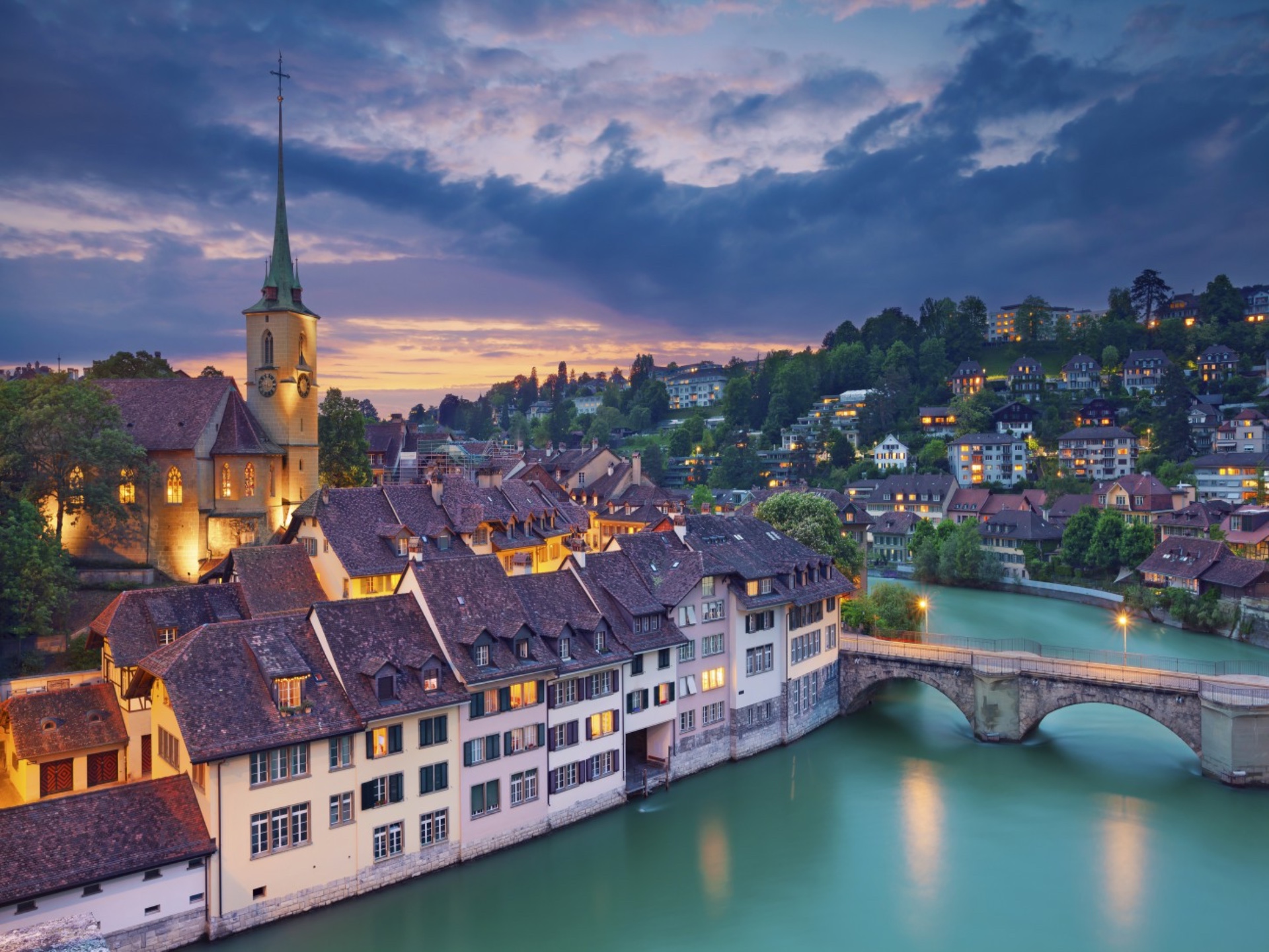
Founded in 1191
Bern was founded by Duke Berthold V of Zähringen as a strategic fortress on the meander of the River Aare. It already held the status of Imperial City by 1218.
Duke Berthold V of Zähringen founds Bern on a promontory above the River Aare. The city gained Imperial status in 1218 following the extinction of the Zähringen dynasty.
Bern joins the Swiss Confederation as its eighth canton, becoming one of the most influential members of the alliance.
Bern Cathedral is laid — the largest Gothic building in Switzerland. Its tower would not be completed until 1893, some 472 years later.
Bern adopts Protestantism. Berchtold Haller and other reformers reshape the city's religious life. Monasteries are converted into secular institutions.
Napoleon's troops seize Bern. The city's famous treasury — the "Bern Funds" — is taken to France. The Helvetic Republic period lasts until 1803.
With the adoption of the Federal Constitution, Bern becomes Switzerland's "Federal City" — its de facto capital. The Federal Council and Parliament are based here.
Bern's Old Town is inscribed on the UNESCO World Heritage List for its exceptional preservation of a medieval urban ensemble.